Bail decisions take place faster than most offenders anticipate. A court may check out an authorities report and a short pretrial analysis, hear a couple of minutes of disagreement, then set a number that can alter the course of a person's life. If you have actually not stood in a bail court, that can sound arbitrary. It is not. The procedure is anchored in law, local policies, threat examinations, and a judge's experience balancing 2 passions that in some cases pull in opposite instructions: securing the public and ensuring the defendant go back to court.
This article walks through how courts think of bond and bond, why similar situations can generate various outcomes, how cash bond engages with business Bail Bonds, and what bars really relocate a number up or down. I will attract from usual techniques across the USA, flag where territories diverge, and deal practical information that aids accuseds, households, and experts navigate the first crucial hours after an arrest.
What bail is indicated to do
At its core, bail is a system to secure a defendant's appearance in court without unnecessary apprehension. That phrase appears in constitutions and criminal policies due to the fact that bond is not meant to penalize prior to sentence. Courts are advised to use the least restrictive problems that reasonably assure two points: that the charged will certainly return to court which the community and details people remain secure while the situation is pending.
Many states now separate the idea of "bond" from "pretrial launch problems." Bail normally refers to cash, while conditions might consist of check-ins, travel limitations, curfews, or no-contact orders. Some territories have relocated away from money bond for most offenses, leaning on nonfinancial conditions and risk-based decisions. Others count on set up amounts and commercial sureties. The legal criterion is similar, but the tools differ.
Money bail, bond, and exactly how the items fit
The vocabulary flounder newcomers. Bond is the amount set by the court. Bond is the tool that posts that amount and guarantees repayment if the accused stops working to show up. There are a number of usual forms:
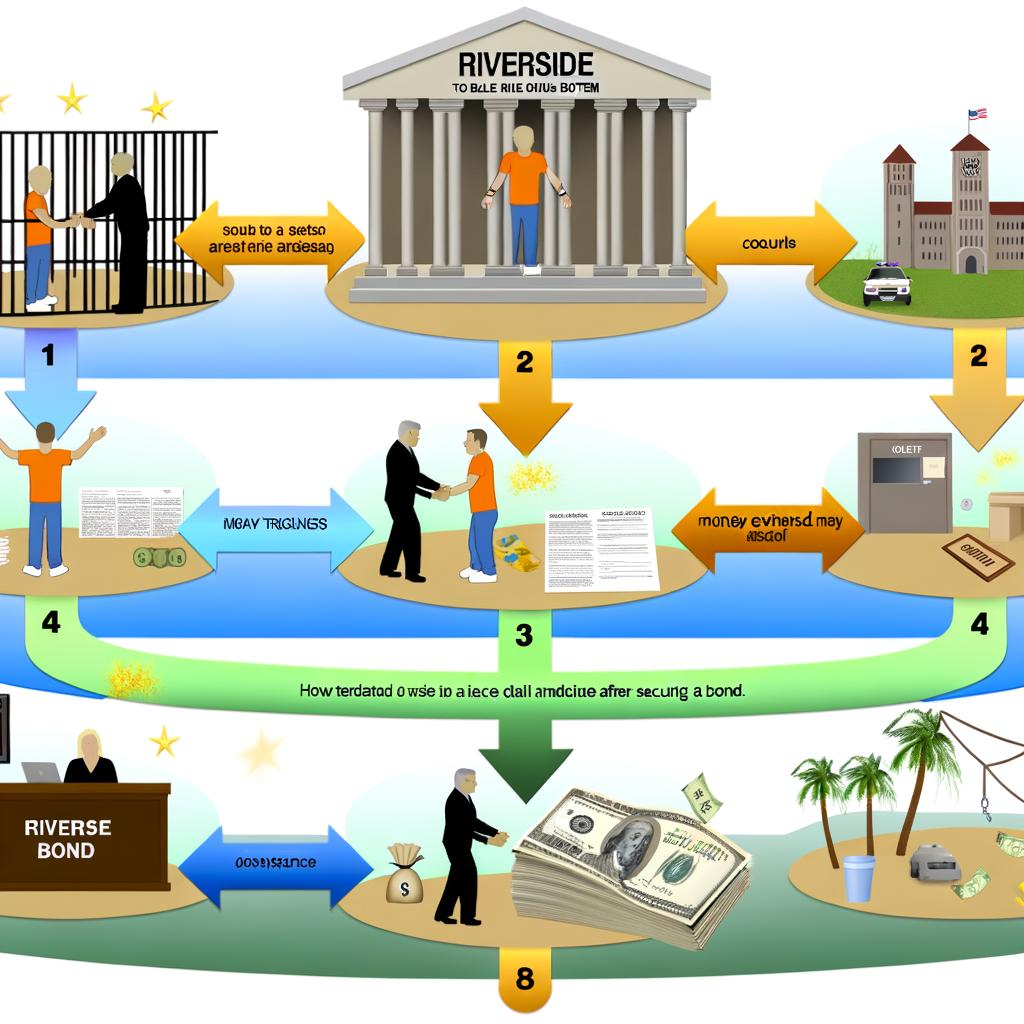
- Cash bond: someone pays the sum total to the court, refundable at the end of the situation minus charges or fines. Secured bond through a surety: a qualified Bail Bonds business guarantees the total in exchange for a nonrefundable costs, commonly 10 percent, and sometimes collateral. Property bond: real property safeguards the bail. The court videotapes a lien equivalent to the bond amount. Unsecured bond: the accused promises to pay if they breach, with no ahead of time money. Release on recognizance: no economic problem, the offender's assurance and court oversight suffice.
Courts can blend and match. A court might set a $20,000 safeguarded bond or, alternatively, allow a $5,000 cash money deposit. The information issue since they form whether someone can get out that day.
Starting factor: bail timetables and legal grids
In several regions, specifically for misdemeanors and typical felonies, officers book offenders with a set up bond amount. Timetables are established by regional courts. They are tentative, however they act as a placeholder up until the opening night. For instance, a routine might establish $2,500 for easy belongings, $10,000 for second-degree robbery, and "no bail" for resources criminal offenses. Some states cap how schedules can be used, calling for customized evaluation within 24 to 48 hours.
Judges understand schedules are blunt devices. They were designed to minimize approximate distinctions at the jail consumption home window, not to replacement for a personalized choice. In court, the routine is often the flooring from which arguments increase or the ceiling that defense counsel attempts to lower, depending on the facts and the defendant's profile.
The two questions every judge answers
Judges ground their choice in 2 inquiries that track legal criteria:
First, just how likely is this accused to go back to court if released, and what problems would reasonably ensure that?
Second, does launching he or she present an unreasonable danger to public security or to any type of certain individual, and what conditions can alleviate that risk?
Everything that complies with feeds those two answers. The legislation in your territory frameworks what a court might take into consideration. Some states permit preventative apprehension for major offenses upon specific findings. Others restrict factor to consider of the offender's hardship or capacity to pay. In time, regional appellate decisions illustration the contours of what is taken into consideration "affordable."
Information on the judge's desk
What information a judge sees varies, however it usually consists of the billing record or probable reason declaration, a criminal history hard copy, and a pretrial services report. That pretrial report can be a couple of web pages describing the offender's connections and take the chance of rating, or a short recap if the area lacks a durable pretrial program. If the accused has advice at this phase, the judge will certainly listen to debate, and in some cases testimony, though disputed evidentiary hearings are unusual at an initial appearance.
A solid pretrial report solutions useful concerns: Is the offender used, and for how much time? That lives at the listed address, and for how much time has the offender resided there? Any kind of prior failings to appear, and were they unyielding or due to a missed out on bus? Does the offender have a key? Exist pending charges or probation? Any type of known compound use problems? Exactly how did previous releases go? When the record lacks detail, attorneys fill up the voids with offers of proof and proffers from family members who appear in court.
Risk evaluations, made use of with caution
Many jurisdictions introduced actuarial risk devices that produce ratings based on historical information. They weigh aspects like age initially arrest, prior failures to show up, present charge intensity, and guidance history. Judges receive a recommendation rate, such as "low threat, launch on recognizance" or "high danger, think about protected bond and general practitioner."
Experienced courts treat these tools as one input. They recognize the limits: formulas can show predispositions in historical policing and prosecution, they can overstate old failings to appear that were not harmful, and they rarely catch favorable anchors like an encouraging employer ready to write a letter and testify. A good court will certainly ask pretrial personnel clearing up questions, after that decide that marries the information with the human details provided in court.
Charge severity is a starting lens, not the last word
The affirmed crime matters. Violent felonies, offenses entailing tools, sex criminal activities, and criminal offenses with prone targets have a tendency to cause greater bond or stricter conditions. But charge tags can misdirect. An assault with a nonserious injury at a household barbeque can land under the same law as an extreme unfamiliar person attack. Judges read the probable cause story to understand what actually took place, not just the caption.
In residential property and medication cases, courts often focus on patterns. A single theft by a teen without document is not the like a string of thefts to sustain dependency, specifically when prior launches led to new arrests. For drunk driving, the blood alcohol degree, crash details, and prior DUIs drive decisions.
Flight danger: reading the signs
Most courts create an inner hierarchy of threat signals based upon lived experience. A stable address with verified residency, a job with a validated company, registered kids in local institutions, and supportive household in court all reduced perceived flight danger. Beyond of the journal, regular actions, no verifiable employment, prior bench warrants, use pen names, and out-of-state ties can press a court toward protected conditions.
The source of past failures to appear issues. A defendant that missed court two times since notifications were sent to an old address looks various from someone that made off for a year after uploading a significant bond. When defense counsel clarifies the circumstances and creates proof of updated contact details, it usually changes the judge's calculus.
Safety issues and sufferer input
Public safety and security problems can drive the hardest bond decisions. Residential physical violence situations are a prime example. If the probable reason affidavit describes intensifying actions, or if there are pending protection orders, several courts will pick more stringent problems such as stay-away orders, no weapons, alcohol limitations, and sometimes general practitioner monitoring. District attorneys often present sufferer input through an advocate. Judges will certainly take into consideration those declarations, yet they additionally seek corroborating variables, such as prior calls for service, injuries, and past violations of court orders.
For gun costs, judges weigh whether the tool was filled, where it was located, and whether the offender is banned from having guns. In narcotics cases, scale, packaging, and interactions evidence can suggest dealing, which can elevate area safety and security concerns also missing violence.
Ability to pay and the push for proportionality
Across the country, courts are approaching a more clear query right into ability to pay. Some state constitutions and court regulations currently need courts to take into consideration whether the accused can realistically upload the amount collection. The thinking is uncomplicated: if the goal is look and safety https://rentry.co/yk5soyuf and security, an amount that guarantees detention for the bad yet is unimportant for the well-off does not offer the mentioned functions. Judges commonly ask defense attorney directly, what can your client pay for, and can family add? They might after that choose an unsafe bond with added problems, or a money deposit alternative at a fraction of the complete amount.
This is not uniform. Some places still fail to scheduled quantities without deep query. Even there, an excellent record from advice, attending to capability to pay with concrete information like pay stubs or family affidavits, can change outcomes.
The function of Bail Bonds companies
Where guaranty bonds are common, business bail bondsmans equate a court's number right into a practical path out of jail. If a judge sets a $25,000 secured bond, the majority of offenders will not upload full money. A Bail Bonds firm generally bills a costs of about 10 percent, in some cases lower or greater depending upon state regulation, instance type, and competitors. That costs is generally nonrefundable. Collateral may be needed, particularly for greater amounts or if the defendant does not have solid neighborhood ties.
Judges know exactly how this market functions. Some will certainly establish quantities with the costs in mind, understanding that a family members can gather $2,500 however not $7,500 on short notice. Others choose cash down payments paid to the court, which are refundable to the payer when the instance shuts, to stay clear of pressing households towards nonrefundable fees. In jurisdictions skeptical of industrial guaranties, courts lean on unsafe bonds combined with supervision instead of high protected amounts.
Conditions past dollars
Money is only one lever. Courts commonly construct a release package with split conditions tailored to the threats they perceive. The best bundles specify and quantifiable. They may include normal reporting to pretrial solutions, time limit and electronic monitoring, medication testing tied to treatment referrals, surrender of keys, limitations on driving, or stay-away areas specified by blocks or general practitioners exclusion areas. When a caregiver or company shows up in court and accepts duty to motivate compliance, judges take notice.
Conditions should be sensible. Requiring daily check-ins for someone functioning a building and construction work with moving hours is a recipe for failing. Experienced judges ask functional inquiries: How will you reach visits? Who enjoys your kids while you are in court? If the responses are weak, they might readjust conditions as opposed to default to detention.
Why similar instances can cause various amounts
From the gallery, bond court can look irregular. Burglary situation An obtains $5,000 secured. Burglary case B gets release on recognizance. The difference often hinges on details the court heard: one offender could have 3 pending cases and 2 current failures to appear, the other has none. One may have endangered a shop worker, moving the instance towards a safety and security threat. One may have a steady union task with a foreman who turned up and guaranteed them.
Local society contributes. Urban courts with durable pretrial services feel comfy using nonfinancial problems. Country courts with minimal supervision tools might lean on cash bond. Some judges are just more danger averse. Prosecutorial and defense methods matter as well. A district attorney who consistently pertains to first appearances with complete criminal background, sufferer input, and thoughtful referrals often tends to convince. A defense attorney that brings family members, letters, and a concrete prepare for conformity commonly wins lower or nonfinancial conditions.
When apprehension gets on the table
In some situations, the legislation enables or calls for detention without bond. Examples consist of capital offenses in many states, specific terrible felonies under preventative detention laws, and probation or parole holds submitted by managing firms. In those setups, judges hold an even more official hearing to decide whether there is clear and convincing proof that no conditions can reasonably assure security or appearance. Those hearings feel and look different, with testament, interrogation, and more stringent rules.
Even short of official apprehension, judges often set really high safe bonds in significant instances. Critics argue this functions as de facto detention for the poor. That criticism has actually pushed reforms that need explicit findings when a court chooses a quantity the accused can not meet.

How disagreements move the needle
Neither side manages the number, however good advocacy issues. Defense counsel must deal with the two concerns head-on, providing a compact story with evidence. A limited presentation may consist of confirmation of employment, lease or home loan statements, letters from neighborhood participants, and a suggested guidance strategy with transport information. An attorney who can say, my client's sis is present, she will drive him to pretrial check-ins every Tuesday and court days, and here is her work schedule revealing schedule, usually acquires the court's trust.
Prosecutors who want greater bond or tighter conditions do best when they mention specifics as opposed to labels. Rather than calling an offender a threat, they can point to a recent security order offense, state the days, and explain the supposed conduct. They must additionally engage with capability to pay. Suggesting a protected quantity that is beyond reach, without protecting why nonfinancial alternatives would certainly not work, welcomes judicial pushback.
Timing, logistics, and the peaceful impact of the calendar
Bail is not made a decision in a vacuum cleaner. Vacations, court stockpiles, and transportation timetables can alter the practical weight of a decision. In some jails, uploading after hours is hard. In others, pretrial services does not operate on weekend breaks, so certain release conditions are difficult till Monday. A judge familiar with those logistics may pick problems that can be carried out promptly, or establish a review for the next company day when solutions resume.
The calendar likewise matters in the contrary instructions. If a trial date is months away and the accused has actually currently invested significant time apprehended on a low-level infraction, courts usually reassess. Many jurisdictions require regular bond testimonials for restrained defendants, a backstop versus inertia.
Examples from the trenches
A first-time felony burglary defendant, jailed for taking electronic devices worth about $1,200 from a big-box shop, encounters a scheduled bond of $5,000. The pretrial record shows stable real estate for three years, part-time employment, and no failures to appear. The defense proposes release on recognizance with weekly phone check-ins. The prosecutor demands a $2,500 safeguarded bond pointing out the felony amount. A judge knowledgeable about the regional docket, knowing that phone check-ins work well for low-risk defendants, launches on recognizance with a no-contact order for the store. The accused appears to all hearings and resolves the case with probation.
A residential violence situation, third occurrence in year, consists of a 911 telephone call recording with hazards and pictures of wounding. The offender has 2 previous offenses of a no-contact order and one bench warrant from a year ago. The district attorney requests for $50,000 safeguarded and GPS, cautioning that the sufferer fears immediate injury. The protection points to a task and a new momentary residence far from the target, supported by the company and a property manager letter. The judge chooses $20,000 safeguarded plus general practitioner and alcohol tracking, no-contact applied by exclusion zones, and a stringent conformity schedule with once a week standing checks. The premium via a Bail Bonds business winds up at 10 percent, $2,000. Family members articles within a day, and the GPS is fitted prior to release.
A fentanyl belongings with intent situation includes 300 pills, a range, and cash money. The offender has one prior felony and two failings to show up that brought about fast apprehensions. The pretrial device flags high risk for failure to show up. Defense proposes a $5,000 unsafe bond with day-to-day coverage. The judge, cautious of both neighborhood safety and trip, sets a $15,000 secured bond or a $3,000 cash money down payment, plus in-person check-ins and medicine testing. The household can not afford the $1,500 premium that an affordable surety might provide, but they cobble together the $3,000 cash money down payment over two days. The deposit is refundable, an important difference for the family's finances.
Regional differences to maintain in mind
New Jersey removed business cash bond for a lot of situations in 2017, shifting to risk-based evaluations and judicial apprehension hearings for a smaller sized subset of significant offenses. Washington, D.C. has long released the vast majority of defendants without money bond, counting on solid pretrial guidance. California try out statewide risk-based release, saw pushback, and currently sits in a crossbreed position with routines, judicial discernment, and neighborhood risk tools. Texas, Florida, and several midwestern states continue to utilize timetables greatly, with guaranty bonds a common route to launch. Each system asserts public security as its north celebrity. Outcomes differ, and the dispute continues.
For a defendant or member of the family, the takeaway is straightforward: recognize your area's routines. Calling a neighborhood public defender's office or a trusted private lawyer for a fast get in touch with before accusation frequently yields useful support that saves time and money.
When and exactly how bond can be revisited
Bail is not sculpted in stone. Defense counsel can submit a motion to decrease bail or change conditions based on new info, transformed situations, or hardship. Usual triggers consist of acceptance right into a therapy program, a validated real estate strategy, or a work offer. District attorneys can move to increase bail if the accused breaks conditions, dedicates a brand-new infraction, or if brand-new realities emerge.
Judges with heavy dockets value reliable discussions. Bring paperwork, keep the debate tight, and show how the proposition attends to the two core inquiries. Courts often arrange brief "conformity schedules" where pretrial cases are reviewed in batches. Defendants who succeed, turning up and complying with the regulations, gain trustworthiness that pays dividends if issues arise.
Practical support for family members and defendants
- Coordinate early with a legal representative and pretrial services. Confirmation issues. Have addresses, telephone number, pay stubs, and referrals ready. If making use of a Bail Bonds firm, inquire about premiums, security, and any kind of monthly charges prior to finalizing. Review the agreement and clarify responsibilities to the bondsman. Ask the court about cash deposit options. A partial cash down payment commonly sets you back much less than a nonrefundable costs, and it comes back if the defendant looks like required. When recommending problems, believe logistics. Transport, child care, work schedules, and phone gain access to all impact compliance. Keep paperwork arranged. Court notifications, invoices, and problems should be in one place. Missed appointments are often preventable with an easy calendar system.
Trade-offs and the human reality
Every bail decision is a compromise. Detaining a low-risk offender can bring about work loss, housing instability, and a worse situation outcome, even if the person is ultimately acquitted or gets probation. Releasing a risky accused with insufficient conditions can cause new criminal offense or scare tactics of witnesses. Judges bring that stress daily. The best ones do not outsource judgment to a schedule or a rating. They listen, ask sensible questions, and readjust conditions to the facts at hand.
Money makes complex whatever. The existence of a robust Bail Bonds sector provides family members a route to release when money is tight, yet the costs are actual costs that never ever return. Courts that provide money down payment choices or depend a lot more on nonfinancial conditions can reduce that burden, yet they require guidance resources to make it function. There is no complimentary service. Regions spend for pretrial team, electronic tracking, and compliance calendars. Offenders pay with costs, down payments, and time.
What defense attorney can do better
Seasoned defense attorney treat bail hearings as an examination and a sales pitch rolled right into one. They gather realities quick, confirm everything they can, and request conditions that fit the customer's life. They do not promise the moon. If a customer has 3 failures to show up, they confront that history, describe what is different currently, and back it with proof. They grow relationships with pretrial team and recognize which judges will accept an imaginative service, such as work-release design schedules, and which want typical conditions.
They likewise believe downstream. A high secured bond posted with a guaranty could fix today's trouble however can catch a client in debt. A somewhat higher money down payment could be tough to assemble today, but it comes back if all goes well. The lawyer's task is to map those alternatives and assist the family members pick the course that fits their threat resistance and finances.
The profits on numbers
If you desire a formula for bond quantities, you will certainly be dissatisfied. Past schedules, there is no universal graph that converts facts into a number. What exists is a consistent set of inputs and a predictable collection of issues. Juries search for supports: housing, job, family, and past conformity. They seek red flags: physical violence, weapons, hazards, and failings to appear. They look for devices that handle threat: supervision, GPS, testing, and targeted orders.
Well-prepared events can influence the result. An accused who reaches opening night with validated info and a practical plan is far more likely to leave the front door that day. When cash is part of the formula, recognizing the distinction in between money, guaranty, and unprotected options can conserve thousands. And when the initial decision fizzles, prompt movements and new information usually lead to a 2nd look.
Bail is where the system shows its worths in mini. When judges utilize the least limiting problems that really take care of danger, they honor both freedom and safety. When lawyers and households bring the truths that matter, and when pretrial solutions do their work well, the number on the paper starts to really feel much less like a hunch and even more like a decision shaped by reason and experience.
ABBA Bail Bonds 900 Avila St STE 101 Los Angeles, CA 90012 (213) 296-0901 https://abbabailbonds.com